
FOR IMMEDIATE RELEASE
June 13, 2025
Industry to Legislature: Stop the Power Grab by Big Cannabis
New Analysis Reveals 5:1 Opposition from All Applicants & Licensees, 18:1 Opposition from Social Equity Businesses
BOSTON – A review of 112 public comments submitted to the Joint Committee on Cannabis Policy reveals overwhelming opposition to proposals that would change Massachusetts’ cannabis license ownership limits.
“Local, independent small-business leaders know that expanding market share for the largest operators undermines the promise of legalization for the rest of the industry,” said Equitable Opportunities Now (EON) Co-Founder and Executive Director Shanel Lindsay. “We hope the Senate hears the voices of those it set out to empower.”
The Joint Committee on Cannabis Policy April 9 hearing focused on eight bills to change cannabis ownership limits and a selection of other bills. The overwhelming majority of industry comments were strongly against changing ownership limits by a margin of nearly 5 to 1. This analysis only includes written testimony and does not include oral testimony delivered at the hearing.
“Entrepreneurs with the fewest resources took time away from running their businesses to make their voices heard, and they almost unanimously oppose changes to ownership limits,” said EON Deputy Director Kevin Gilnack. “Unfortunately, the voices of the biggest, most politically connected businesses and their lobbyists drowned out local small businesses.”
The omnibus cannabis bill passed by the Massachusetts House of Representatives would allow the largest, most profitable businesses to have:
- Six adult use retail dispensaries (double the current limit of 3)
- Ownership of up to 35% of an unlimited number of dispensaries (currently limited to less than 10%)
- Three medical dispensaries
- Ability to deliver medical cannabis to patients
- Three adult use manufacturing licenses
- Three medical manufacturing licenses
- Three adult use cultivation licenses
- Three medical cultivation licenses
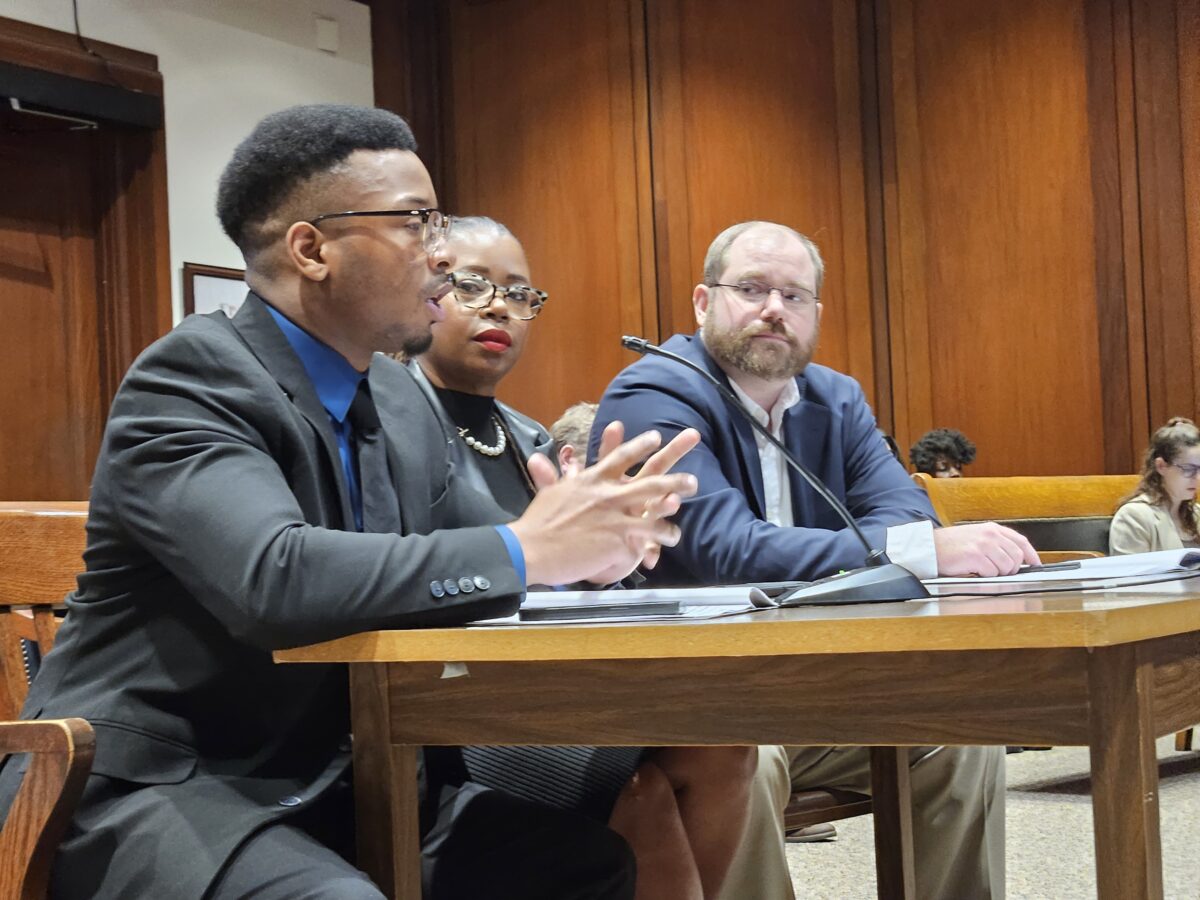
While both sides were pretty evenly matched at the hearing with 10 speakers in favor and 11 opposed, five social equity business leaders spoke in opposition compared to just one who spoke in favor and the overwhelming majority of written comments were in opposition by a more than 5:1 ratio.
EON’s analysis was conducted by Public Affairs Associate Charles Savage and Deputy Director Kevin Gilnack. The following is a summary of their findings:
| Support Changing Ownership Limits | Oppose Changing Ownership Limits | Ratio of Opposition | |||||
| Oral | Written | Total | Oral | Written | Total | ||
| Total Comments | 10 | 5 | 15 | 11 | 26 | 37 | 2.47 |
| Cannabis Applicants & Licensees | 4 | 1 | 5 | 7 | 16 | 23 | 4.60 |
| Social Equity Businesses | 1 | 0 | 1 | 5 | 13 | 18 | 18.00 |
| Current Cannabis Control Commissioners | 0 | 0 | 1 | 1 | |||
| Former Cannabis Control Commissioners | 0 | 0 | 1 | 1 | |||
| Nonprofit Leaders | 1 | 0 | 1 | 4 | 2 | 6 | 6.00 |
| Lawyers | 2 | 1 | 3 | 0 | 0 | 0 | 0.00 |
| Other Ancillary Businesses | 1 | 0 | 1 | 1 | 0 | 1 | 1.00 |
“Massachusetts made a promise to build a cannabis industry rooted in equity, competition, and community empowerment,” said MCEC founding member Pure Oasis Owner Kobie Evans. “Removing ownership limits now would break that promise and reward those who already hold the most power, at the expense of equity entrepreneurs and local businesses that are just beginning to take root.”
As the Senate considers the future of cannabis policy, advocates and social equity businesses are calling on lawmakers to listen to the voices of those most impacted by the war on drugs — not those most invested in consolidating market share.
Written testimony from social equity applicants and licensees warns of the dire threat that changing the industry so early on would have on their businesses:
- “Changing the rules now would destabilize this fragile ecosystem and put the futures of equity businesses and workers at risk,” said Sean Berte, cofounder of Firehouse, a Social Equity and Economic Empowerment company finalizing a retail license in Boston.
- “Without these limits, MSOs will gain even more power to undercut small businesses, dominate wholesale pricing, and squeeze out equity and community-rooted operators,” said social equity cultivator Boey Bertold of Paper Crane Cannabis.
- “We strongly believe that now is the wrong time to revisit license caps. Doing so would undermine several foundational goals of the cannabis industry in Massachusetts: consumer education, product diversity, and the equity principles written into the law… Raising license caps will only pull the rug out from under those equity was supposed to support. Please don’t let that happen again.,” said Co-Owner and Chief Operating Officer of social equity business Terpene Journey, LLC Justin Eppley.
Current and former public officials also raised concerns about how proposed license ownership changes would impact small local businesses and communities:
- “I have had many conversations with a local retailor in my district regarding the challenges small cannabis distributors face. They are highly concerned that the cannabis industry in Massachusetts is headed in the direction of some states which allowed large industry actors to expand to every corner of the market, driving small business owners out and raising prices for consumers through market consumption,” wrote state Representative James Arena-DeRosa. “At present, many of the social equity businesses have already been bought by MSOs, a concerning trend we should not let continue. Allowing MSOs to increase their retail capabilities will hurt small businesses and consumers while changing the landscape of an industry intended to be run by local members of the community.”
- According to written testimony from Commissioner Kimberly Roy, “Current proposals to lift the current license cap threaten to undermine these [social equity] goals, harm those we are mandated to help and as a by-product may create a ‘Walmart effect’ supply chain where market consolidation, buying power and price manipulation can be controlled by the wealthy few.”
- “Our ownership limits in Massachusetts provide protection against corporate concentration by Altria, British American Tobacco, Molson Coors, and other companies who are lobbying for federal legalization and preparing to make acquisitions in markets like Massachusetts,” said Former Commissioner Shaleen Title. “What would be the policy implications of doubling the potential market share of these companies?”
Equitable Opportunities Now and the Massachusetts Cannabis Equity Council urge legislators to protect and strengthen current ownership limits, pass legislation like Sen. Liz Miranda‘s bill to improve enforcement of ownership limits (S.88), and ensure the Commonwealth continues leading the nation in equitable cannabis reform.
“Doubling the license cap on retail dispensaries from 3 to 6 would open the floodgates for large, multi-state operators to dominate Massachusetts’ cannabis industry at the expense of small, social-equity owned businesses. We shouldn’t force our local, single-license entrepreneurs to compete against operators who can spread out flat costs and overhead over five or six locations while leveraging nationwide supply chains, marketing, and resources,” said Sen. Liz Miranda. “This move would undermine the original intent of cannabis legalization, which carried with it the spirit of remediation for the mass incarceration of Black and Brown people throughout cannabis prohibition and the War on Drugs. It has taken a lot of work to build a cannabis market here in Massachusetts in which the most impacted communities could thrive—this pending legislation threatens to undo that progress.”
EON partnered with the Black Economic Council of Massachusetts and dozens of social equity licensees and applicants to create the Massachusetts Cannabis Equity Council (MCEC) to amplify the voices of the dozens of businesses and hundreds of workers who would be harmed if legislators change the rules of the industry.
Click here to review EON’s full analysis and access written testimony and related data.
##
The EON Foundation, Inc. d/b/a Equitable Opportunities Now (EON) is dedicated to closing the racial wealth gap, advancing economic justice, and repairing the harms of the war on drugs by promoting equitable ownership and employment opportunities in the Massachusetts cannabis industry. We empower Black, Brown, and other marginalized communities harmed by prohibition and over-policing through education, advocacy, and direct programming. Learn more at www.masseon.com.
The Massachusetts Cannabis Equity Council (MCEC) is an advisory committee of cannabis social equity business leaders that provides strategic guidance on EON’s programming and policy initiatives.
———- Forwarded message ———
From: Kevin Gilnack <kevin@masseon.com>
Date: Fri, Jun 13, 2025 at 11:02 AM
Subject: REPORT: Cannabis Industry Opposes License Changes 5:1, Per Testimony
To: Kevin Gilnack <kevin@masseon.com>
Cannabis Policy Committee Hearing Testimony Shows Overwhelming Support for
Preserving License Ownership Limits
TO: Interested Parties
FROM: EON Deputy Director Kevin Gilnack
RE: Key Takeaways – Written Public Testimony on Cannabis License Caps
DATE: June 13, 2025
Oral and written testimony submitted for the April 9, 2025 hearing of the Joint Committee on Cannabis Policy demonstrates overwhelming opposition to lifting current cannabis license ownership caps. A clear and diverse coalition including cannabis entrepreneurs, elected officials, Cannabis Control Commissioners, nonprofit leaders, ancillary businesses, and patients urged the Legislature to protect market access and small business opportunity.
Overall, there were nearly 2.5 comments in opposition to changing ownership limits for every one in favor.
Within the industry, opposition was even greater:
- 23 out of 28 applicants and licensees opposed changing ownership limits (a nearly 5:1 ratio)
- 18 out of 19 social equity applicants and licensees opposed changing ownership limits (a 18:1 ratio)
Summary of Findings
| Support Changing Ownership Limits | Oppose Changing Ownership Limits | Ratio of Opposition | |||||
| Oral | Written | Total | Oral | Written | Total | ||
| Total Comments | 10 | 5 | 15 | 11 | 26 | 37 | 2.47 |
| Cannabis Applicants & Licensees | 4 | 1 | 5 | 7 | 16 | 23 | 4.60 |
| Social Equity Businesses | 1 | 0 | 1 | 5 | 13 | 18 | 18.00 |
| Current Cannabis Control Commissioners | 0 | 0 | 1 | 1 | |||
| Former Cannabis Control Commissioners | 0 | 0 | 1 | 1 | |||
| Nonprofits | 1 | 0 | 1 | 4 | 2 | 6 | 6.00 |
| Lawyers | 2 | 1 | 3 | 0 | 0 | 0 | 0.00 |
| Other Ancillary Businesses | 1 | 0 | 1 | 1 | 0 | 1 | 1.00 |
Written Testimony Highlights
Written testimony from social equity applicants and licensees warns of the dire threat that changing the industry so early on would have on their businesses:
- “Changing the rules now would destabilize this fragile ecosystem and put the futures of equity businesses and workers at risk,” said Sean Berte, cofounder of Firehouse, a Social Equity and Economic Empowerment company finalizing a retail license in Boston.
- “Without these limits, MSOs will gain even more power to undercut small businesses, dominate wholesale pricing, and squeeze out equity and community-rooted operators,” said social equity cultivator Boey Bertold of Paper Crane Cannabis.
- “We strongly believe that now is the wrong time to revisit license caps. Doing so would undermine several foundational goals of the cannabis industry in Massachusetts: consumer education, product diversity, and the equity principles written into the law… Raising license caps will only pull the rug out from under those equity was supposed to support. Please don’t let that happen again.,” said Co-Owner and Chief Operating Officer of social equity business Terpene Journey, LLC Justin Eppley.
Current and former public officials also raised concerns about how proposed license ownership changes would impact small local businesses and communities:
- “I have had many conversations with a local retailor in my district regarding the challenges small cannabis distributors face. They are highly concerned that the cannabis industry in Massachusetts is headed in the direction of some states which allowed large industry actors to expand to every corner of the market, driving small business owners out and raising prices for consumers through market consumption,” wrote state Representative James Arena-DeRosa. “At present, many of the social equity businesses have already been bought by MSOs, a concerning trend we should not let continue. Allowing MSOs to increase their retail capabilities will hurt small businesses and consumers while changing the landscape of an industry intended to be run by local members of the community.”
- According to written testimony from Commissioner Kimberly Roy, “Current proposals to lift the current license cap threaten to undermine these [social equity] goals, harm those we are mandated to help and as a by-product may create a ‘Walmart effect’ supply chain where market consolidation, buying power and price manipulation can be controlled by the wealthy few.”
- “Our ownership limits in Massachusetts provide protection against corporate concentration by Altria, British American Tobacco, Molson Coors, and other companies who are lobbying for federal legalization and preparing to make acquisitions in markets like Massachusetts,” said Former Commissioner Shaleen Title. “What would be the policy implications of doubling the potential market share of these companies?”
Implications
This overwhelming testimony underscores the broad-based and credible coalition opposed to lifting ownership caps. Any effort to increase or eliminate limits will be seen as favoring large corporate actors at the expense of equity and small business goals codified in Massachusetts law.
Lawmakers and regulators who support equitable cannabis policy should consider this testimony a mandate to:
- Preserve current license caps.
- Strengthen enforcement against de facto control or circumvention of existing limits.
- Advance pro-equity legislation to fortify and expand meaningful participation.
Methodology
Equitable Opportunities Now received the redacted, consolidated packet of written testimony submitted to the Joint Committee on Cannabis Policy related to its April 9, 2025 hearing. EON Deputy Director Kevin Gilnack and Public Affairs Associate Charles Savage reviewed all 122 pages of the 54 written comments and the oral testimony of 58 people delivered during the nearly five hour hearing. Each public comment was logged in a tracking spreadsheet capturing:
- Name
- Affiliation
- Background
- Bills supported
- Bills opposed
- Category (Applicants/Licensees, patients, elected officials, regulators, etc.)
- Social Equity Business status
- Support, opposition, or neutrality on changes to ownership limits.
Source Materials
- Joint Committee on Cannabis Policy Hearing 1 Combined Redacted Written Testimony
- Joint Committee on Cannabis Policy Hearing 1 Recording of Oral Testimony
- Joint Committee on Cannabis Policy Hearing 1 Testimony Data
Conclusion
Equitable Opportunities Now and the Massachusetts Cannabis Equity Council urge the Legislature to focus on passing the dozens of bills with broad support across the industry – bills that strengthen, rather than destabilize, Massachusetts’ cannabis market.
EON has prioritized five key bills that would increase the value and viability of social equity businesses (Appendix A) and supports 20 additional bills that promote industry-wide progress (Appendices B and C).
We strongly recommend the Legislature not rush an omnibus cannabis bill this early in the session, particularly when so few of these bills have received consideration or debate. To make the most of this legislative session for all industry stakeholders, legislators should consider:
- Holding a hearing and fast tracking deliberations on a standalone bill to address CCC governance issues
- Hold hearings on remaining cannabis bills prioritizing those that were favorably reported in prior sessions and bills that reduce costs, increase access to capital, and strengthen equitable participation in the industry
- Table ownership changes for a future legislative session when we’re confident current limits have been enforced and the industry is more mature and social equity businesses have had a chance to establish themselves
- Bring representatives of all industry stakeholders to the table to talk through policy disagreements and challenges to develop the most robust and impactful industry omnibus bill possible
If the Legislature insists on revisiting ownership limits, we implore Beacon Hill leaders to:
- Start low and slow, with a narrow pilot;
- Prioritize all social equity businesses, both those who wish to remain independent and those seeking partnerships; and
- Establish an inclusive, transparent process for evaluating any future changes.
To discuss this research or these policies issues further, please contact EON Deputy Director Kevin Gilnack at kevin@masseon.com